WITH MISGUIDED but well-intentioned motives, an English General sought to anglicize and ‘uplift’ the Indian masses. But despite some initial success, the exercise failed, as he confided to his friend, the French Indologist (and devotee of the Ramakrishna Order), Jean Herbert:
You can convince the men and make them imitate us when they are young and even when they are no longer young, although it is hard work; you can tempt the girls and women into changing their attitude on many points. But in every household, you ultimately come up against one person, whom you never see or hear, and with whom you are not allowed even the most indirect communication, and who dashes your efforts to smithereens: the grandmother!
The General had stumbled upon a truth that India knows so well: that the greatest power isn’t pompous bluster and condescending imperiousness, real power is grandmotherly: wise, loving, patient, enduring and subtle.
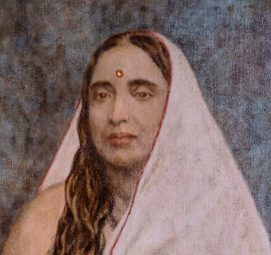
Holy Mother Sri Sarada Devi, the helpmate and spiritual successor to Sri Ramakrishna, embodied this ‘grandmotherly’ power, supercharged by her spiritual attainments. Fulfilling Sri Ramakrishna’s plan, she became a guiding, supportive force during the early years of the Ramakrishna Movement.
As Sister Devamata, an American nun who spent time with Holy Mother observed, “…there was a lofty majesty of her bearing which caught the heart…the human covering was too thin to hide the radiance of divine consciousness beneath.”
First President of Independent, Dr S. Radhakrishnan, summed up the assessment of many who came in contact with Holy Mother: “Everyone who has had a chance of meeting her came out with the view that she was an embodiment of purity, of wisdom, gentleness and sweetness.”
We’ll celebrate the birthday of Holy Mother through two events in Vedanta Hall, on Tuesday 5 December and the Public Celebration on Sunday 10 December (Broadcast live on Vedanta Society of NSW YouTube channel). See Coming Events.