OVER TWO thousand five hundred years ago in India, increasing groups of mystics and renunciants appeared. It was a time of social, political and economic upheaval. A new awareness was brewing in humanity, provoking many psychological and religious responses.
Through introspection and meditation, these renunciants and their spiritual forbears discovered a Transcendent Reality within, more real and vibrant than the external world of the senses. A power greater than any gods or priests: beyond rituals, beyond life and death – a power even overturning the very idea of heaven as the end of existence.
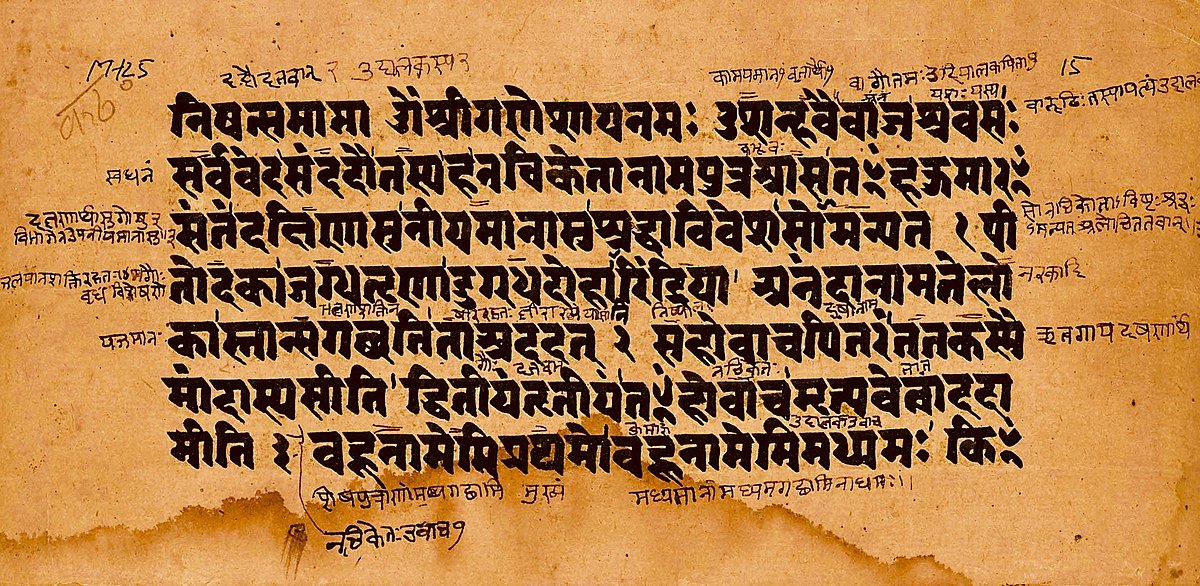
These renunciants’ experiences gave rise to inspired teachings and subtle insights – ‘ecstatic snapshots of transcendent reality.’ Their wisdom was recorded in The Upanishads, the philosophical, religious texts of Hinduism.
Through stories, anecdotes, and question-answer sessions, they explored the deepest mysteries of life: “What makes my hand move, my eyes see, my mind think? Does life have a purpose, or is it governed by chance? What is consciousness?
“Unlike other scriptures that look outward in reverence and awe of the phenomenal world, the Upanishads look inward,” observes Eaknath Easwaran, “finding the powers of nature only an expression of the more awe-inspiring powers of human consciousness.”
“In the whole world, there is no study so beneficial and so elevating as that of the Upanishads. It has been the solace of my life. It will be the solace of my death.”
Erwin Schrodinger, Nobel Prize Winner for Physics
Quotes from the Upanishads:
- AUM stands for the supreme Reality. It is a symbol for what was, what is, And what shall be. AUM represents also, what lies beyond past, present and future.
Mandukya Upanishad - AS the web issues out of the spider, and is withdrawn, as plants sprout from the earth, as hair grows from the body, even so, the sages say, this universe springs from the deathless Self, the source of life.
Mundaka Upanishad - AS a caterpillar, having come to the end of one blade of grass, draws itself together and reaches out for the next, so the Self, having come to the end of one life and dispelled all ignorance, gathers in its faculties and reaches out from the old body to the new.
Brihadaranyaka Upanishad
A monthly Katha Upanishad lecture series in Vedanta Hall, with a talk/ PowerPoint presentation by Pravrajika Sridharaprana, commences on 18 April, with the concluding talk in November.